www.RichmondOptometry.com
(804) 272-0848


Sunday, September 16, 2012

 
INTRODUCING:

Dr. Michelle Solomon


Dr. Michelle Solomon, a Richmond native, grew up in Midlothian, VA. She received an undergraduate degree from James Madison University with a B.S. in Health Sciences and a Biology minor. She completed her doctoral studies at the Illinois College of Optometry (ICO) in Chicago. In her time at ICO she was involved in several organizations which included the American Optometric Student Association, National Optometric Student Association, Contact Lens Society, Tomb and Key Honor Society (a society based on high academic achievement), Beta Sigma Kappa Honor Society, and the Virginia Optometric Association.

Dr. Solomon is dedicated to providing the best care possible to her patients. She is up to date with the latest developments in technology and advancements within the realm of Optometry. She is a current member of the following organizations:

-          American Optometric Association
-          Virginia Optometric Association
-          Beta Sigma Kappa International Honor Society
-          Tomb and Key Honor Society

In her spare time Dr. Solomon enjoys traveling and spending time with family and friends.  Just ask her about her trip to Hawaii this summer!

*** A Note from Dr. Paull ***

We are very excited to have Dr. Solomon as the new owner of the practice.  There will be a transition during the month of September, and the 'official' name change will take place on October 1st, 2012.  Dr. Amanda Paull will still be working at the office 1 day per week, as it has grown to be a 6-day per week practice.  Thank you to all the wonderful patients who have helped it grow over its years in practice, and we look forward to growing in the future with Dr. Solomon!  Dr. Paull will still be providing eye  care in nursing homes from Virginia Beach to Richmond, but she and her family have moved to Williamsburg, which means that the practice will now be in the capable hands of Dr. Solomon.  Please welcome her at your next eye exam!


Friday, May 25, 2012

The Eye is the Window to Your Body's Health


Rick C. learned that paying close attention to vision can actually not only indicate your eye’s health but it can be an indicator of your overall body health as well.  He came to our office because about a week ago he got some debris in his left eye, and after rubbing his eye, he noticed his vision was blurry only in his left eye.  He thought it would get better, so he waited about a week and it was still very blurry.  Additionally, he saw a small pink band in the center of his vision.  Hoping it was just a scratch on his eye, he wasn’t prepared to find out what the actual diagnosis was for his loss of vision in the left eye. 

Rick's normal right eye

Rick's left eye, showing some small blood spots at the edges of the swollen optic nerve (yellow circle)

Dr. Paull reviewed his retinal photos and immediately noticed small blood hemorrhages and a swollen optic nerve in his left eye only.  This would explain the pink spot – it was actually some blood floating in his eye that his brain interpreted as a spot in his vision!  Rick was only able to see 20/100, although at his exam the year before he had been able to see 20/20. After additional tests by a neuro-ophthalmologist the next day, Rick was diagnosed with “ischemic optic neuropathy”, which is essentially a stroke to the eye.  This occurs when the blood supply to the optic nerve is suddenly decreased and the eye loses vision.   The nerve started to swell, and this burst some of the blood vessels in the eye.  Rick started medication that helps supply blood again to his left eye and improve the possibility of regaining some vision.

Rick was very thankful that although he suffered a ‘stroke of the eye’, he did not suffer a stroke to another part of the brain or something worse, such as an infection or blood disease.  Although Rick is only 65 years old, he is making sure to carefully monitor his blood pressure, blood sugar, cholesterol, and overall health.  Most bodily conditions can actually affect the small blood vessels in the eye, which is why the eye is the ‘window’ in to the body’s health!  Yearly eye exams are recommended to help not only check your vision, but your overall health as well.

Tuesday, March 27, 2012

E-Readers and Eyestrain


Check out the video clip of Dr. Paull explaining the secret to decreasing eyestrain. Make sure you know the 20/20 rule of taking a break every 20 minutes for 20 seconds!

Sunday, February 26, 2012

Help others see, and save money!

Donate your old pair of glasses or sunglasses to the Lions Club, and receive $5 off any self pay fees at our office!


The Lions Club has a special program for donating eyeglasses to needy people throughout the world. When Dr. Paull was in optometry school, she participated in a missions trip to Belize where over 12,000 pairs of Lions club glasses were lugged to hundreds of needy people in the rural areas of Belize. Each pair of glasses was carefully cleaned by a volunteer, and the exact prescription was measured. Volunteer doctors measured the patients' prescriptions and checked for eye disease, and then glasses are given to patients who were sometimes able to see clearly for the first time in their life! To date, the Lions Club has helped over 100 million people with eye care services throughout the world.

Do not let your glasses gather dust in your house! Bring them in to our office and we will thank you by taking $5 off any self-pay fees (not applicable towards insurance copays, limit is 2 per patient). And don't forget those old sunglasses! We will accept non-prescription sunglasses as well, giving you an excuse to update your style!

Friday, February 17, 2012

A Recipe for 20/20

Did you know that eating healthy can help boost your vision as well? Your eye's health is dependent on your overall health, and if your overall health is good - your eyes will function better and you will have clearer vision. Many common antioxidants and nutrients have been proven to help prevent cataract as well as macular degeneration. For example, vitamins A, C, D, and E, as well as omega-3 fatty acids, lutein and zeaxanthin, have all been proven to help fight eye diseases. Foods that contain these nutrients include all colorful fruits and vegetables, salmon, walnuts and spinach. Interestingly, we have one patient in our practice, J.B., who was found to have small spots in the back of her eye due to a degeneration of her retina that could potentially lead to macular degeneration and blindness. She started taking vitamins that contained the antioxidants needed for the eye, and when she returned a year later, the spots had diminished! Eating healthy can help save your sight. For more information on nutrients and the eye, please visit: http://www.allaboutvision.com/nutrition/nutrition_summary.htm.
Feeling hungry? Enjoy a delicious recipe that contains foods that help support eye health:

Strawberry Spinach Salad
Ingredients:
2 TBS Seasame Seeds
1 TBS Poppy Seeds
1/2 Cup Olive Oil
1/4 Cup Distilled White Vinegar
1/4 tsp Paprika
1/4 tsp Worcestershire Sauce
1 TBS Minced Onion
10 Ounces Fresh Spinach
1 Quart Fresh Strawberries
1/4 Walnuts

DIRECTIONS:
1. In a medium bowl, wisk together the sesame seeds, poppy seeds, sugar, olive oil, vinegar, paprika, Worcestershire sauce and onion. Cover, and chill for 1 hour.
2. In a large bowl, combine the spinach, strawberries and walnuts. Pour dressing over salad and toss. Refrigerate 10 to 15 minutes before service.
**Add salmon to this salad for an omega-3 boost!

Tuesday, January 31, 2012

Retinal photo of the year


TOP PHOTO: the retina of the right eye of our patient, D.C. Note the white area where the retina has detached.


BOTTOM PHOTO: the retina of the left eye of our patient, D.C. Note the normal, red retina throughout the photo.


Our patient, D.C, sure must be glad that he has a 'spare tire' when it comes to eyes. When he was in his late teens, he obtained a basketball injury to his right eye. The injury caused the retina to detach from the back of his eye, so he is unable to see normally in that eye. Interestingly, a small part of the retina remained attached to the eye in the top part of the eye, so now he can actually see things that are below him only (the top part of the eye sees the bottom of our visual field). The injury also caused a traumatic cataract in his right eye, so there is less light entering that eye as well.
The beautiful retinal photos above show the retinal detachment in our special patient's eyes. He can still see normally out of his left eye, so you would never know from looking at him that he had one eye that was essentially blind. Aren't you glad God gave us two eyes?!

Sunday, December 4, 2011

Celebrate OneDay - helping those in need

Since 1988, over 7 million people have received complimentary vision care and eyewear through LensCrafters' charitable programs. In 1993, one day of the year was designated to help people in need receive no-charge eyecare and vision services.

This year, the designated day is Tuesday, December 13th. It will be celebrated as "OneDay": the single largest day of giving across the Luxottica company worldwide. Dr. Amanda Paull & Associates will be participating with this event. Eye exams and eyewear will be provided at no charge for those who fill out an application demonstrating financial need. Appointments may be scheduled by calling the office at (804) 272-0848. Please spread the word to those who would benefit from seeing more clearly!

Thursday, November 3, 2011

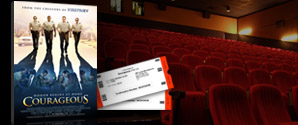
We'll pay your way to the movies!

Have you seen the movie 'Courageous'?
Dr. Amanda Paull & Associates wants to support this funny, inspirational, family-centered movie. Just go see it in the theatres, and just bring in your movie ticket receipt. You will receive that amount off of any self-pay fees at our office (not applicable towards insurance copays). Be sure to bring a box of tissues - this movie is a real tear jerker and a great cure for dry-eye! Offer expires December 15, 2011. Spread the word to family and friends - it is a movie you will never forget! Check it out at: www.CourageousTheMovie.com

Thursday, September 29, 2011

Lions are Rockin' the world!

Do you know what the largest service organization in the world is? It is the Lions Club. This international organization provides glasses and vision services for needy people all over the world. They have also helped over 8 million people receive cataract surgeries. Over 120 million children have been able to receive help with vision services through the Lions Club. There are opportunities for anyone to participate with this wonderful organization. In fact, Dr. Paull supports her local Lions club and they work hard with fundraisers and fun events to provide glasses and to help with special needs of local residents. If you know of someone who is in need of glasses or an eye exam but may lack the funds to pay for it, please contact our office at (804) 272-0848 and we can direct you to the correct Lions coordinator that may be able to help.
To see more about the fun that the Lions members have, watch the humorous hip hop video below!


Friday, July 29, 2011

An Optometrist's Prayer

Optometrist's Prayer

God bless this optometrist.
Help me do all that I might
To care for all my patients
And improve their precious sight.

I pray that You will guide my hand,
And may it be Your will
That I shall daily strive to grow
In knowledge and in skill.

All the sunsets and the rainbows;
A smile; a flag unfurled -
May I help them see more perfectly
The beauty of Your world.

Lord, please bless my practice
And may I always be
A willing tool within Your hand
To help my patients see. Amen.

Ramona K. Cecil

(Dr. Paull posted this - It is a great reminder that is needed every day!!)

Sunday, June 12, 2011

The Tech Savvy Patient of the Week


Our patient, A.T is smart. So smart that he thought ahead before his eye exam and actually took a picture of his contact lens box on his iphone. During the exam, when I asked if he knew what his former brand of contact lenses was, he just whipped out his iphone and showed me the exact information I needed. This is the model patient - someone who photographs their prescription information so that it is easily retrieved when necessary!

I am proud of patients who take advantage of technology. In fact, I had a patient who sent me a picture message to my cell phone of the eye infection she had on a Sunday. She was also out-of-town, so it sure did help me tell her the best treatment for her situation. Although seeing the real thing is much better, when necessary, technology can help in many situations!

I'm thankful for all of our smart, tech-savvy patients!

Friday, May 20, 2011

Don't let "Anchors Aweigh" cause "Vision Away"

From Dr. Levy:

I had a patient recently who was complaining that he couldn't read any of the menus on a recent cruise he had been on, nor could he read his books on deck or on the beaches they stopped at on the cruise, despite the fact that he could normally read. His left eye was completely blurred up close, and his right eye somewhat less so. He also noticed that everything was brighter than normal, but he attributed that to being in the Caribbean. When he got back on land, the inability to read continued for several days, although by the time he made it in for his exam, it had returned.

"What happened?", he asked."Let me ask you a question," I responded; "Do you suffer from seasickness when you go on a cruise?" "Yes, why?" "Did your doctor prescribe you a patch?" "Yes." "Did you put it behind your left ear?" "Yes..."

One of the more popular seasickness patches contains scopolamine, a medicine that helps with motion sickness, but is also used in an eyedrop we use to dilate people's pupils.

By putting the scopolamine patch behind the patient's ear, enough scopolamine was absorbed through the skin, that it dilated the patient's pupils, relaxing the patient's focusing system, leaving him unable to focus up close. Because the patch was put behind the left ear, more of the medicine was absorbed on the patient's left side, and affected the patient's left eye more severely.

Although the patient was reassured that the condition was completely subsided by this point, he was still somewhat annoyed that he was inconvenienced on his cruise by something that was supposed to help him.

"Good thing the waiter recited the specials each night..." he quipped.

So any time you are given a new medicine by a doctor, it's always a good idea to read up on, or just ask, what the potential side effects might be!

Sunday, May 1, 2011

Lesson Learned - money and time wasted on online glasses ordering

Last week I had one patient who learned about online glasses the hard way. He came in wondering why he couldn't see anything out of his new glasses that he had purchased online with his brand-new prescription. I had him put his glasses on, and I marked where his pupils were in the glasses. They were almost 1 centimeter LOWER than where the prescription was located. Poor guy, he was seeing through a place in the glasses that was 50% less prescription than what it should have been. No wonder he wasn't very happy! He learned that in certain prescriptions, it makes a difference whether you look through the top of the glasses, the bottom of the glasses, and in some cases, even the sides of the glasses. He said that the online order form just filled in an 'average' for the distance between his pupils, and that it put an 'average' for how high the bifocal line should be. Well, in order to see clearly out of your prescription, your pupils must line up correctly behind the lenses. In this case, we confirmed that the prescription was actually correct in the glasses, however, it was located in an area that didn't match his face and his eyes. This means that you must try on the frames to your face and make accurate measurements about where your pupils are in the frames. Sometimes, you get what you pay for! I have always been pleased by the customer service offered by LensCrafters, and I know they do an excellent job at making sure everyone's glasses are fitting them properly. Next time you get a glasses prescription, make sure it is accurately fit in the glasses frames as well!

Picture: A Progressive lens design shows that the prescription for distance vision is at the top, while it progressively changes to a near prescription at the bottom. Depending on your prescription, it may be different at the top than what it is at the bottom!

Sunday, April 3, 2011

Don't cry over ocular allergies; 3 simple weapons for combating pollen


Beautiful spring flowers are blooming - be sure to protect your eyes from the pollen!

Here are just 3 suggestions for helping to keep your eyes healthy and comfortable during allergy season. Other options may be available for some people - have a full comprehensive eye exam to determine what may particularly benefit you.

1. Prescription anti-allergy eyedrops. You may be a candidate for a prescription anti-allergy eye drop. Special tests can be done at your next eye exam that determine whether you have an allergic response under your eyelids, or if you have other signs such as redness that would benefit from certain medication.

2. Daily disposable contact lenses. If you wear contact lenses, consider a daily disposable contact lens. Many allergy sufferers love having a supply of daily disposable contact lenses during allergy season so that they can dispose of their contacts at the end of the day and not have any pollen or protein buildup to irritate their eyes. Ask the doctor at your next contact lens exam if you are a candidate for daily disposable contact lenses (not available in all prescriptions).

3. Safe over-the-counter eyedrops. Please stay away from the allergy eyedrops that say "Get the red out". These over-the-counter eyedrops contain certain ingredients called vasoconstrictors that cause the red blood vessels to temporarily get smaller. However, there is a rebound reaction, and prolonged use can cause more redness. Some safe anti-allergy eyedrops that are over-the-counter are called "Alaway" and "Zaditor".
These eyedrops contain an antihistamine and mast cell stabilizer, which safely help to decrease the allergic reaction.

You may also benefit from safe over-the-counter rewetting drops that are preservative free. These eyedrops come in single-use vials and they help dilute the allergen and wash out any irritants.

Did you know that rubbing your eyes due to allergies can actually cause more astigmatism and blurry vision?

See clearly during allergy season and protect your eyes with these simple anti-allergy suggestions! Don't forget to schedule your eye exam for a comprehensive check of your eyes!

Friday, March 18, 2011

Grab those shades!

Picture on the left: An iris melanoma, which has an incidence rate of about 4.7 people per million Americans. (photo courtesy of the Mayo clinic)

A good pair of sunglasses could save your life! Although rare, eye cancers can occur in adults due to UV light exposure from the sun. Also, prolonged exposure from a tanning bed, artificial lights, or other UV light sources may damage the eye. Therefore, please be sure to wear UV light protection whenever you are outdoors or exposed to UV light. Even if you are not looking at the light source, the beams may still penetrate around the outside structures of the eye and cause ocular complications.

Dr. Paull had an up-close and personal experience with this during her first year of practice. A 55 year-0ld male patient had a suspicious brown spot in his otherwise clear blue eyes, and Dr. Paull noticed that it had not been documented in any previous exams. He was sent to Duke for some special tests, and it was determined he had a rare iris melanoma that was growing very rapidly. It was quickly excised, before spreading to other areas of his body. He stated that he had been a lifeguard for many years of his life, and he often didn't wear sunglasses while out in the sun.

Thank goodness that large sunglasses are definitely in style. Keep those shades on and you are not only protecting yourself from cancers, but also from eye diseases like cataract and macular degeneration. Dr. Paull sees patients every day that have 'sun spots' or tiny raised areas on the outer part of their eye called pinguecula. These areas can cause irritation and can grow into larger structures called pterygium that may eventually blur vision.

Therefore, Dr. Paull wants to see all of her patients (young and old) to be sunglass models this spring! Grab your favorite pair of sunshades when enjoying this beautiful weather!

(more information may be found at: http://www.webmd.com/melanoma-skin-cancer/tc/eye-intraocular-melanoma-treatment-health-professional-information-nci-pdq-general-information#s2.1)


Sunday, March 13, 2011

Goggles and glaucoma? What you need to know before purchasing your next pair of goggles.


Make sure your goggles fit properly before swimming! Studies have found that tight, small goggles can actually raise the pressure of your eye to dangerous levels. Did you know that the pressure exerted by certain small racing goggles can raise a person's eye pressure 13 mm? For example, if your normal eye pressure was 15, then when you were wearing the small goggles, your pressure would be 28! The average pressure is between 10-20mm, and if it raised above 21 for prolonged periods of time, optic nerve damage can result and glaucoma can develop. This leads to a gradual loss of peripheral vision and can eventually cause tunnel vision or blindness if not controlled.


The picture above shows several styles of goggles, of which the bottom left goggle is the safest. If in doubt, just bring an extra pair of your goggles in to our office and we can remove the front part and measure your pressure while you wear them in our exam room (see picture E)! Courtesy of Morgan et al, http://bjo.bmj.com/content/92/9/1218.full .

This is not intended to suggest that swimming with goggles can lead to blindness! However, for the serious swimmers, it is in their best interest to use large goggles that do not press too hard on the orbit of the eye. For example, in the above picture, the best goggle style was letter C - it has a continuous interface between the two eyes and the pressure exerted on the orbit was not clinically significant. However, stay away from goggles that look like the one pictured in letter A - that particular style raised eye pressure an average of 5mm. The goggles pictured in letter B and D only raised the pressure by about 1.5mm.

For more information, please read the interesting article published by Morgan et al. at: http://bjo.bmj.com/content/92/9/1218.full. In this study, the measurements had to be taken outside of the water. When under water, the pressure of the water could exert even more force on the orbit, potentially increasing the pressure more. However, there is some good news for swimmers! It is also estimated that 20 minutes of any aerobic exercise like swimming actually decreases eye pressure by about 4 mm.

Therefore, the moral of the story is to keep swimming! However, make sure you are wearing comfortable, nice large goggles. I found a good pair on Amazon.com (pictured below): http://www.amazon.com/Aqua-Sphere-Seal-Swim-Mask/dp/B000EORGXQ/ref=pd_sim_sg_4 .
Happy swimming!

Saturday, March 5, 2011

Tinted glasses: More than just cosmetic


from Dr. Levy:


I had a patient this week who presented with a complaint that "everything looks green, especially when I'm reading off of white paper." As she was an elderly retiree, and reading was one of her few pastimes, this was especially troubling to her. Psychological studies have shown that a green color near the center of the visible spectrum of light wavelengths is supposed to be the most pleasing to the human eye, but it wasn't to this frustrated lady.

My first thought was that she may have had cataracts developing, as people will report their vision taking on a yellow, orange, or brown color as cataracts develop. Maybe if hers were turning yellow, it was such an intense yellow she may have perceived it as green. However, she had already had cataracts removed from both eyes several years ago, so that was not the case. I then wondered if her implanted lenses had some kind of green tint to them, maybe an ultraviolet blocker, but examination of the implanted lenses revealed them to be crystal clear, and ordinary implants.

My next thought was that maybe her maculas were starting to degenerate, and the blue, yellow, and red receptors were degenerating faster and earlier than the green receptors. I went along with that as a working hypothesis and tried to figure out how to solve her problem. Half from memory, and half from pulling up a color wheel on the internet, I identified the color opposite green, found that it was red, and asked one of the opticians if we had a pink or red colored tint sample that I could have her look through. We found a pink/brown combination lens, and then a pure pink lens, and held them up in front of her reading glasses. Immediately her hunched-up shoulders relaxed, she let out a sigh of relief, and said, "Yes. That's perfect!"

There is a small subfield of optometry know as Syntonics, that promotes the idea that colors, filters, and tinted lenses can affect how we perceive the world and how our visual systems function.
While there isn't a lot of published scientific evidence to back it up, this appeared to be one case where we could solve a functional visual problem, with a simple tinted lens that would normally have been used for cosmetic purposes!

Wednesday, February 16, 2011

When you hear hoofbeats, sometimes it IS a zebra!

From Dr. Robert Levy

There's an old saying in medicine and healthcare: "If you hear hoofbeats, think horses, not zebras." What that means, is that when you listen to a patient's symptoms and complaints, you should think of the most obvious and common things it could be, and not the unusual or rare things that it could be.

But yesterday, I saw a zebra!

I had a 94-year-old patient who one week ago presented to the emergency room with a complaint of an extremely painful right eye. The emergency room doctor told her she probably got soap in her eye, and flushed it out, and recommended that she see an eye doctor the next day, and gave her the name of a well-regarded opthalmologist in her area. She went to that doctor the next day, still in pain, and he diagnosed a corneal erosion; the sloughing off of the top layer of the cornea. He bandaged the cornea with a bandage contact lens, gave her several drops to use (lubricants for comfort, and an antibiotic to prevent infection) and saw her back the next day. He told her she was significantly better the next day, and scheduled a follow-up for one week later. She came to see me two days before that scheduled one-week follow up, still in pain. I took a look at her cornea, and it was clean as a whistle! No sign of any abrasion or erosion, and nothing visibly wrong with the eye. But she was in so much pain she was literally crying. Further probing of her symptoms revealed that her teeth and jaws hurt when she ate, or chewed, or brushed her teeth, and she had pain in her forehead, and radiating back to her ear. At this point, I knew it was more than just her eye, and diagnosed trigeminal neuralgia.

The trigeminal nerves are one of the twelve pairs of cranial nerves that leave the brain and go directly to parts of the body; this one is called the "trigeminal nerve" because it has three branches - one that goes to the eye, one that goes to the upper jaw, and one that goes to the lower jaw. When she related her eating, chewing, and brushing complaints, I knew it had to be that. "Neuralgia" means nerve pain, and that is what she had. I referred her to a neurologist who will be able to treat her symptoms and finally give her some relief.

So the point of this story is not to pat myself on the back for coming up with a less-than-usual diagnosis, but to advise people to tell doctors ALL your symptoms, even if you don't think they're relevant. If she had mentioned the jaw and teeth involvement a week ago at the ER, or the next day in the corneal specialist's office, they may have been able to come up with the same diagnosis as well. But because she was going to "an eye doctor", she didn't think the teeth and jaw symptoms were important, and she only brought up the eye pain.

Today's optometrists are trained to diagnose far more than eye problems, as long as there is some ocular involvement that brings the patient into our office to begin with!

I look forward to receiving the neurologist's report, and to seeing the patient back when the neurologist discharges her, hopefully finally free of pain!

Sunday, February 13, 2011

Dr. Levy's Jeapardy episode is fun to watch!

Dr. Levy claims that his buzzer wasn't working correctly during the first part of the Jeapardy episode. He was clicking 'too fast', and he was told during the commercial break that he actually had to wait before clicking in order for the computer to register his click! Perhaps that is true, or was it just rigged? Well, after he learned the secret, Dr. Levy raises his meager score of 0 to 7600, tying the champion! It gets more exciting, though, during Final Jeapardy, when the two contestants are tied and they battle the last question... For the first time in over 14 years, there is an unusual outcome to the game!


Friday, January 28, 2011

The myths and facts about Ted Williams' vision

From Dr. Robert Levy:

So Dr. Paull's recent entry about our 20/10 patient reminded me of the late great Red Sox player, Ted Williams, one of the greatest baseball hitters of all time. Williams was rumored to be able to see 20/3 (able to see from 20 feet away what a normal-sighted patient can see from three feet away); rumored to be able to see the seams on a baseball as they approached him at 90-100 miles-per-hour and tell by the spin of the seams whether the ball was going to be a fastball (straight pitch) or a breaking ball (curve ball or the like); was rumored to be able to read the label on a 78rpm record as it spun (records are what we had before compact discs and mp3s, for you young-uns).

While these make for amusing stories, Williams himself admitted that none of them were true. He DID in fact have 20/10 acuity, same as our star patient from the last blog entry, meaning he could see from 20 feet away what normal-sighted people could see from 10 feet away - but the other myths and legends were just that, myths and legends. Although as he entered the Marines as a pilot in World War 2, the ophthalmologist performing Williams' entry examination said his vision was on the order of a "1 in 100,000 occurrence."

Still, this remarkable vision was one contributing factor to his being one of the best hitters of all time, and to date, the last player to hit over .400 for an entire season. His lifetime batting average ranks among the best of all-time as well.

So he may not have been able to see the seams on a spinning baseball, or read the label on a spinning 78rpm record, but his actual visual acuity is still legendary.